Saturday, December 14, 2013

Natural Light Portraiture - Post-assignment

We are done with the Natural Light assignment of this week. I tried to use the natural light of the day but I couldn't get really good pictures so I used more the light of the lamps. 
Still, I liked this assignment because I think that people can express a lot in a simple picture.

The most difficult part of this assignment was trying to get the best light. Sometimes I couldn't get enough light and it was kind of dark and sometimes I got that much light that the pictures were too bright. But I tried to manage my camera the best way I could and these are the pictures that I got.

These are my 3 best pictures. My favorite one is the one of my dog. I really like it because it is so natural and it looks like he is thinking in his own things. I like it also because the light is reflected on his body and his skin seems shiny and perfect.


Natural Light Portraiture - Pre-assignment

Our assignment for this week is Natural Light Portraiture. This is  a new challenge for us because this is our first assignment of taking pictures of people and it is new and inexperienced. But this is good too because we have the opportunity to learn how to do portraits of people.

For this assignment we should use the natural light of the day or another source of light, like a lamp. The person that we want to take a picture of should stand next to a window to get better the light on his body, face of whatever we want to photograph of.
Especially for natural light portraiture we have to know how to manage the ISO, up or down to get the the correct amount of light in our picture.

This is a new and fun assignment, so let's do it the best way we can.

Sunday, November 24, 2013

Near and far - post-assignment

We are done with this assignment. This wasn't one of my favorite assignment because I didn't know which landscapes take pictures at and we just had a few days to do it. It was kind of stressful. However, I tried to do my best taking those pictures and editing them.
It was also kind of difficult because i wasn't sure if I was shooting correctly and if the back if the photo was blurry or not.
But anyway, these are the three pictures that I chose for this assignment. My favorite one is the first one, the one with the ocean and the rocks. I like it better in color though.


Near and far - pre-assignment

For this week, our assignment is called "near and far". We have to try to take pictures as Ansel Adams; landscapes or something like that. 
As this famous and amazing artist, we have to try to get everything focused on the picture. For that, we will use the aperture priority in our camera. The aperture has to be in the second higher number, thus, the aperture hole will be the smallest and we will get everything focused. 
To get everything focused, we will always focus in the object that is located on the middle of our landscape. Otherwise, if we focus on the object that we have closer, the farther one will be blurry. On the contrary, focusing the infinite or the horizon, the closer object will not be focused and clear.

Landscape images are my favorite, I like taking photos of landscapes, so I think that I will enjoy doing this assignment.


Wednesday, November 20, 2013

Rules of Composition

1. Rule of 3rds
2. Leading lines
3. Patterns
4. Frames
5. Fill the frame

Thursday, November 7, 2013

The BIG Project - 20 books

1. DIANE ARBUS MAGAZINE WORK
Artist: Diane Arbus
Author: Doon Arbus and Marvin Israel
Publisher: Aperture

2. PHOTO SYNTHESIS
Artist: Jerry Uelsmann
Authors: Gainesville, Tallahasse, Tampa, Boca Raton, Pensacola, Orlando, Miami and Jacksonville
Publisher: University press of Florida

3. THE AMERICANS
Artist: Robert Frank
Publisher: Steidl

4. ANSEL ADAMS IN COLOR
Artist: Ansel Adams
Author: Harry M. Callahan
Publisher: Little, Brown and Company

5. SCENIC PHOTOGRAPHY/101
Artist: Kerry Drager
Publisher: Watson-Guptill

6. MASTERS OF PHOTOGRAPHY-PAUL STRAND
Artist: Paul Strand
Publisher: Aperture

7. MASTERS OF PHOTOGRAPHY-EUGENE ATGET
Artist: Eugene Atget
Publisher: Aperture

8. MASTERS OF PHOTOGRAPHY-HARRY CALLAHAN
Artist: Harry Callahan
Publisher: Aperture

9. MASTERS OF PHOTOGRAPHY-MANUEL ALVAREZ BRAVO
Artist: Manuel Alvarez Bravo
Publisher: Aperture

10. ANSEL ADAMS 1902-1984
Artist: Ansel Adams
Author: James Alinder
Publisher: The friends of photography

11.EISENSTAEDT'S GUIDE TO PHOTOGRAPHY
Artist: Alfred Eisenstaedt
Publisher: The Viking Press

12. OTHER REALITIES
Artist: Jerry Uelsmann
Publisher: Bulficnh Press

13. IDEAS WITHOUT END
Artist: Imogen Cunningham
Author: Suzanne Kotz
Publisher: A life in photographs

14. A LEGACY
Artist: Edward Weston
Publisher: Merrel

15. PHOTOGRAPHY REBORN
Artist: Jonathan Lipkin
Publisher: Abrams Studio

16. A LIFE IN PHOTOGRAPHY
Artist: Edward Steichen
Publisher: Doubleday and Company

17. MEN AT WORK
Artist: Lewis W. Hine
Publisher: Dover Publications

18. THIS IS THE AMERICAN EARTH
Artists: Ansel Adams and Nancy Newhall
Publisher: Sierra club- Ballantine book

19. ROBERT CAPA/PHOTOGRAPHS
Artist: Robert Capa
Publisher: Aperture

20. IN REAL LIFE-SIX WOMEN PHOTOGRAPHS
Artist: Leslie Sills
Publisher: Holiday House

LASZLO MOHOLY-NAGY

Laszlo Moholy-Nagy was a Hungarian painter and photographer. He was born on July 20th of 1895 and he died on November 24th of 1946.
He used constructivism in his arts. He also integrated technology and industry in his arts.
He participate in the World War I and he got injured, so he retired and decided to do something related to arts.

His pictures are in black and white. They are kind of special, since there weird objects and their shadows. But this weirdness is what makes this man a photographer.


Tuesday, November 5, 2013

MICHAEL CARROLL and "HAND HELD"

Yesterday we watched the movie "Hand Held". It was a kind of documentary where a photographer called Michael Carroll went to Romania to take pictures of little children that had AIDS illness. Nobody knew that there were over 4 hundred thousand kids ill, and a lot of them were dying. He took pictures of those kids to show the world what was happening there during the fall of the communist regime. A year later he decided to make an organization to help all these children. He called it Romanian Children's Relief. 
This organization still active and through it, we all can help to save these children. Michael helped to save so many kids, but there still lots of them that have AIDS. 
If we all contribute in this, hopefully those kids that have that horrible illness we'll get better.


LEWIS H. HINE

Lewis Hine was an American sociologist and photographer. He was born on September 26th of 1874 and he died on November 3rd of 1940, at age of 66. He was born in Wisconsin.
He wanted to take pictures to change the child labor laws in the United States in those years. Thus, he used his camera as a tool for social reform.

When he was a teacher at a cultural school in New York City, he encouraged his students to use photography as an educational medium. After photographing to hundred of immigrants that arrived to the U.S, he realized that he could use photography as a tool for social reform.

His pictures are in black and white and in vintage effect, and because he was focusing on the child labor laws, he took pictures of all those children that were working on the streets.
The photos are sad, just thinking in what were they doing and how hard were they working being little kids make us think that those days were horrible.


Monday, November 4, 2013

EDWARD WESTON

Edward Henry Weston was a 20th century American photographer. He was born on March 24th of 1886 in Chicago and he died on January 1st of 1958 in California. He was know as "one of the most innovative and influential American photographers" and "one of the masters of 20th century photography". Since he was young he knew that he wanted to be a photographer. Finally he became one and at the beginning he used a style called "soft focus pictorialism". However, some years later, he changed that style to another one based on highly detailed photographic images.

To take pictures, he specially focused on nudes, landscapes, expansive set of subjects, still lifes, portraits and genre scenes. He also focused on people and places of the American West, as well as California.

He was the first photographer who received a Guggenheim Fellowship. In 1947 he was diagnosed with Parkinson's disease and he had to stop taking pictures. The last 10 years of his life he spent watching how his pictures were printed.


Wednesday, October 23, 2013

WALKER EVANS

Walker Evans was an American photographer born on November 3rd of 1903 in Missouri and he died on April 10th of 1975 in Connecticut. He is mostly known for his work for the Farm Security Administration (FSA) documenting the effects of the Great Depression. 
His goal as a photographer was to make pictures that are "literate, authoritative and transcendent". Most of his great photos were exhibited in famous museums like The Metropolitan Museum of Art or George Eastman House.

He used to take pictures in black and white and most of them are specially portraits of people. In the photos anyone appear smiling or happy because as I have just said, the took pictures of the effect of the Great Depression.
The faces of the people on the pictures are very expressive, it seem that all of them have an interesting story to tell about their life.


Tuesday, October 22, 2013

EDWARD J. STEICHEN

Edward J. Steichen was an American photographer, painter and art gallery and museum curator. He was born on March 27th of 1879 and he died on 25th of 1973 of the same month.
He was most frequent photographer in Alfred Stieglitz's magazine "Camera Work". Later Stiegltz and Steichen opened the Little Galleries of the Photo-Secession, which years after became famous.
During years 1923 to 1938, he worked as fashion photographer. His pictures were published in "Vogue" and "Vanity Fair" magazines. He also worked for many advertising agencies. During these years, he was considered the best photographer and the highest paid photographer on the world.
After World War II, he was the director of the Department of Photography at New York's museum of Modern Art. In MoMA museum, he made an exhibition which was seen by 9 million people.

His images are special. They are in black and white and some of them in a kind of vintage effect. Most of them are related with fashion. I really like them because of thet. The models seem so perfect.


Friday, October 18, 2013

Shutter Speed Priority -post assignment

Today ends our Shutter Speed priority assignment. This assigment was not very easy. We had to take pictures to people when while they were running or jumping and it was difficult to catch them in completety stop motion. We jumped from trees and walls, we ran outside the high school...it was very funny.

These are my final pictures.


Sunset

Last weekend I went out to see the sunset by the ocean, and I took these pictures. The sky was really beautiful, it was blue, pink and orange. I went at 6pm and at 6.30pm it was already dark. The fall is getting close!


Wednesday, October 16, 2013

GERTRUDE KASEBIER

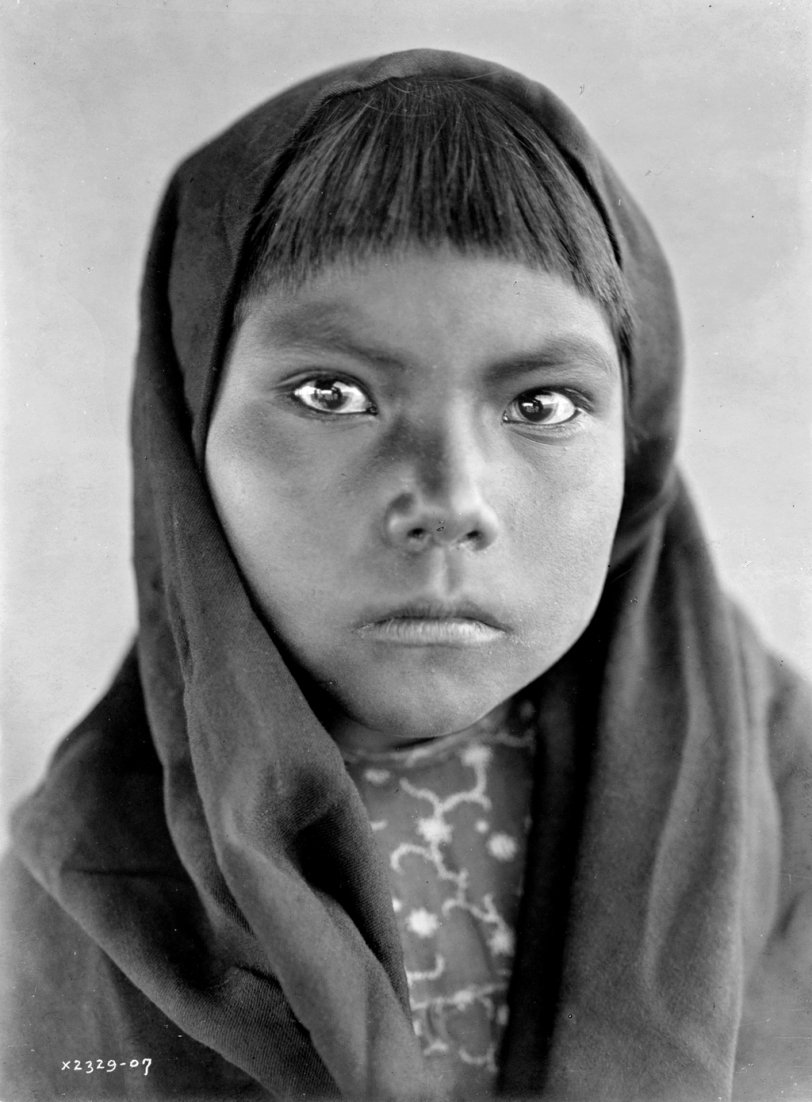
Gertrude Kasebier was one of the most influential American photographers of the 20th century. She was born on May 18th of 1853 in Iowa, and she died on October 12th of 1934 in New York City. She is know for her images of motherhood and her promotion of photography as a career for women. Most of their pictures are portraits of Native American people.

Their pictures are in  mostly in black and white and there specially appear women. With all these women I think that Gertrude Kasebier wants to express that women can also be a photographer and that they are as powerful as men.
The first picture is my favorite one, it's just perfect.


EDWARD CURTIS

Edward Sheriff Curtis was born on February 16th of 1868 in Wisconsin and he died on October 19th of 1952 in Los Angeles. He was an ethnologist and photographer. He is know for taking pictures of the American West and specially of Native American people.
His family lived in poverty, and Edward Curtis had to leave school in the sixth grade. As soon as he could, he built his own camera.
When he got older, he became an apprentice photographer. Then he bought a new camera and he started forming a photo studio.

As I have already said, he used to take pictures to Native American people. Most of his pictures are portraits about those people. There are some in black and white, but most of them are like in a kind of brown color.
This ones are my favorite pictures of him. I like them because the people that appear in the photos transmit a lot with their eyes. They are very serious, but their dark eyes say a lot. They also give us to know about a different culture. We can see their costumes, necklaces, plume...


Tuesday, October 15, 2013

Shutter Speed Priority - pre assignment

Our assignment for this week is use the shutter speed to take pictures. We have to try to shoot to people when they are jumping, running or walking, and try to get them when they are in the air or if thy are running, the person foucused and the rest blur or in movement.

An example of this type of photography is Eadweard Muybridge. He was a British photographer, born on April 9th of 1830 and he died on May 8th of 19047, when he was 74 years old. He is known for his photographic studies of motion and in motion-picture projection. He took lots of pictures of people or animals when they were moving, and with the shutter speed he got the animals and people stopped, in stop motion.

For this assignment our camera has to be in shutter speed priority (TV). The ISO starting in 400 and then we can change it if it's necessary because of the aperture.

For this assingment I'm going to take pictures to people jumping and running.

Thursday, October 10, 2013

IMOGEN CUNNINGHAM - post assigment- my close-up photos

These are my final pictures for the close-up assignment of this week. I focused in flowers to take my close-up photos just because I think that flowers make the photos so nice. I really liked this assignment, it's the one that I liked the most so far. I love my pictures, I think they are so pleasant.


JACOB RIIS

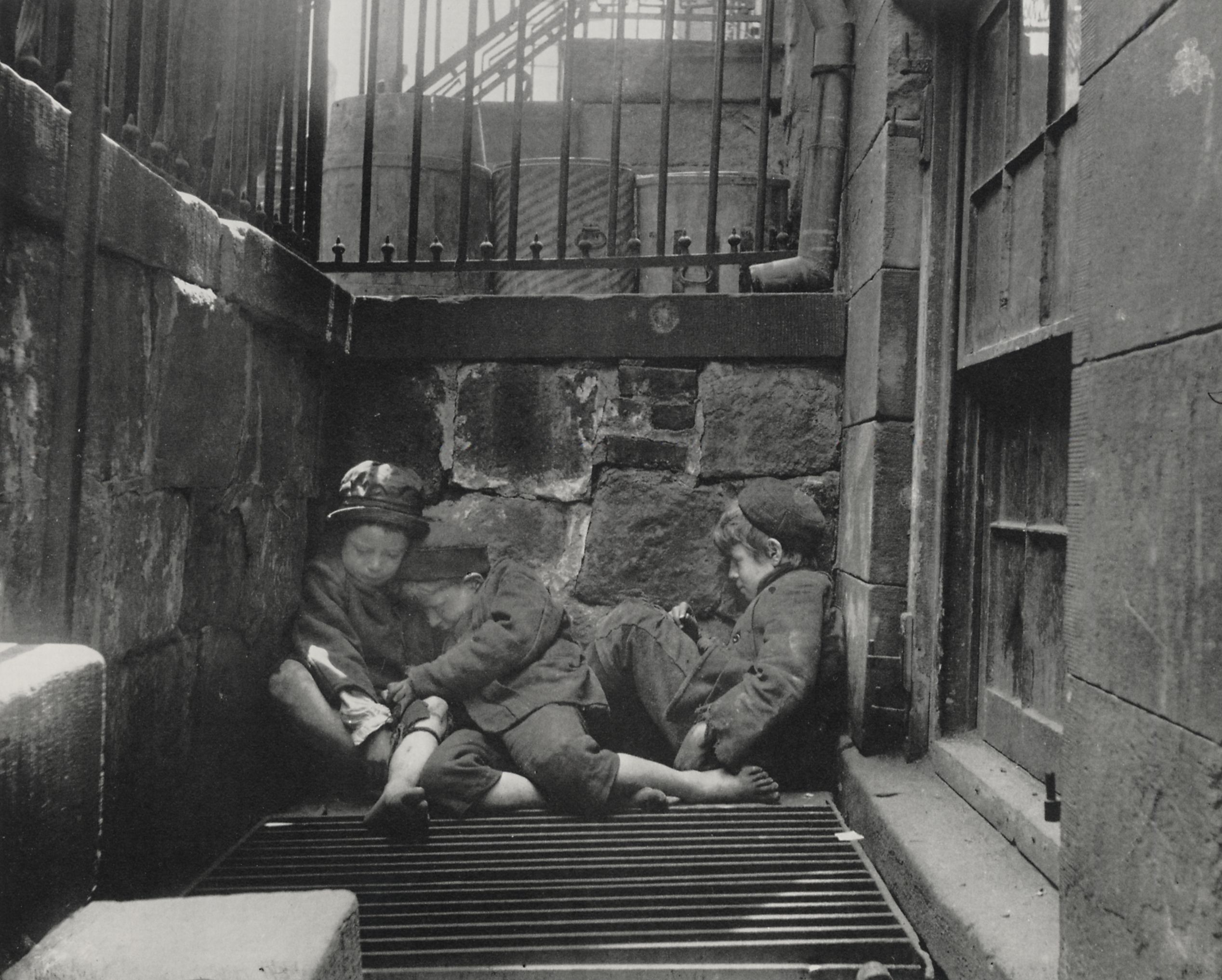
Jacob Riis was a Danish American social documentary photographer. He was born in Denmark, May 3rd of 1849 and he died here in the U.S, in Massachusetts, on May 26th of 1914. He was also a social reformer and journalist. He used his journalist and photographic talents to help the impoverished in New York City, he is know for that. 
He is one of the first photographers who adopt the flash in photography. While he was living in New York, he experienced the poverty and he became a police reporter.
In his pictures there appear the bad living conditions of poor people of that time, he took those kind of photos because he wanted to show those bad conditions to the middle and upper classes.

His pictures are kind of hard, because there appear poor people living and sleeping in the streets, kids that don't have anything to play with and they have to take care of their siblings and try to survive...they are sad.